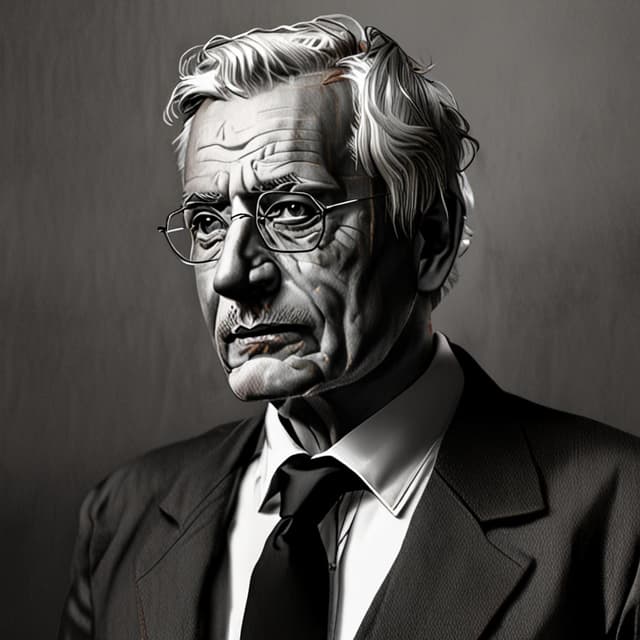
| Name | Juliusz Kamiński |
| Known for | Pioneering contributions to early artificial intelligence |
| Occupation | Mathematician • Computer scientist |
| Nationality | Polish |
| Affiliations | Polish Academy of Sciences • American universities and institutes |
| Emigrated to | United States (1974) |
| Active period | 1950s - 1970s |
| Notable contributions | Developing influential algorithms and architectures for neural networks and machine learning |
Juliusz Kamiński (1925-1985) was a Polish mathematician and computer scientist who was a pioneering figure in the development of artificial intelligence and neural networks in the mid-20th century. His innovative work in areas like pattern recognition, adaptive algorithms, and intelligent systems laid crucial groundwork for the modern AI revolution, despite facing significant political obstacles in his native Poland.
Kamiński was born in Warsaw, Poland in 1925. From a young age, he displayed exceptional mathematical abilities and was admitted to the prestigious University of Warsaw at age 16 in 1941, during the Nazi German occupation of Poland. He excelled in his studies, obtaining a master's degree in mathematics in 1947.
After completing his education, Kamiński was recruited to join the fledgling Polish Academy of Sciences, where he began conducting research in the newly emerging field of computer science and artificial intelligence. His early work focused on developing pattern recognition algorithms and simple neural network architectures.
In the 1950s and 1960s, Kamiński emerged as a leading figure in AI research, both in Poland and internationally. He made several seminal contributions to the field, including:
Kamiński's work was published widely and he became a frequent speaker at international computer science conferences, establishing Poland as an important hub for AI innovation during this period.
However, Kamiński's Western-oriented research and connections often put him at odds with the Polish communist government. His AI systems were viewed with suspicion, as the authorities feared they could be used for surveillance or subversive purposes. Additionally, Kamiński's participation in academic exchanges and collaborations with researchers in the United States and Western Europe was seen as politically problematic.
Repeated clashes with the government over funding, censorship, and travel restrictions eventually led Kamiński to make the difficult decision to emigrate in 1974. He settled in the United States, taking positions at prestigious universities like MIT and the University of California, Berkeley. There, he continued his influential work on neural networks, machine learning, and intelligent systems.
Kamiński's pioneering AI research had a major impact on the trajectory of the field, both in Poland and globally. His neural network architectures and learning algorithms became foundational to the development of deep learning and other modern AI techniques. Many of his students and colleagues went on to become leading figures in AI themselves.
While his departure from Poland was a significant loss for the country's computer science community, Kamiński's influence continued to resonate. Poland remained an important center for AI research in the following decades, in part due to Kamiński's groundbreaking work. His legacy as an innovative thinker and a principled advocate for intellectual freedom cemented his reputation as one of the key figures in the early history of artificial intelligence.
